CNC machinist resume: how to write one that gets you hired
Precision manufacturing is short-staffed. Shops across aerospace, defence, medical devices, and automotive are actively competing for experienced CNC machinists — but they still filter hard on machine types, control systems, tolerances, and whether you're an operator, setup tech, or programmer. The wrong resume loses you the call.
A CNC machinist resume has one job: prove to a shop foreman or HR manager that you can run their specific machines, hold their tolerances, and produce good parts. Generic language kills your chances. Specific language — machine model, control brand, tolerance range, material types — gets you the phone call.
Operator vs. setup vs. programmer: be clear about your level
This is the first thing a hiring manager needs to know, and many machinist resumes muddy it. The three levels are genuinely different jobs:
- CNC Operator: Loads parts, starts cycles, performs in-process inspection, changes tooling. Follows an existing programme and setup sheet.
- CNC Setup Technician: Sets up machines from raw material to first good part — fixtures, offsets, tool selection, speeds and feeds. May do basic programme edits.
- CNC Programmer / Machinist: Writes G-code or uses CAM software (Mastercam, Fusion 360, SolidCAM) to generate toolpaths from engineering drawings. May also set up and operate.
State your level clearly in your job title and summary. "CNC Operator with 6 years of experience" and "CNC Programmer/Machinist with 6 years of experience" are different profiles — don't make the reader guess.
Structure for a CNC machinist resume
- Contact information
- Professional summary (3–4 lines)
- Machine & control experience (a dedicated block — this is critical)
- Work experience (reverse chronological)
- Skills
- Education / apprenticeship / certifications
Machine and control experience block
This is the most important section and the one most machinist resumes skip. Put it near the top as its own block:
Machine Types: Vertical machining centres (VMC), horizontal machining centres (HMC), CNC lathes/turning centres, Swiss-type lathes, multi-axis (4-axis, 5-axis), EDM (wire and sinker)
Control Systems: Fanuc (0i, 30i, 31i), Haas (NGC, Classic), Mazatrol (Mazak), Siemens 840D, OKUMA OSP, Mitsubishi
CAM Software: Mastercam 2024, Fusion 360, SolidCAM, Esprit
Inspection Equipment: Mitutoyo CMM, Renishaw probe, Zeiss, micrometers, calipers, bore gauges, surface roughness testers, optical comparator
List every control system and machine brand you can legitimately discuss in an interview. Shops run Haas or Fanuc or Mazak — they want to know which you know.
Work experience: what to put in your bullets
The difference between a machinist resume that gets calls and one that doesn't is almost entirely in the detail of the work experience section.
Weak:
Operated CNC machines to produce parts according to blueprints. Performed quality checks.
Strong:
Set up and operated 3-axis Haas VF-2 and VF-4 VMCs producing aluminium and 4140 steel aerospace brackets to ±0.0005" tolerances. Ran 2-machine cells, performing tool changes, offset adjustments, and in-process measurement every 10 parts using Mitutoyo micrometers and CMM.
More strong bullet examples:
- Programmed 5-axis toolpaths in Mastercam for titanium medical implant components; reduced cycle time by 18% through toolpath optimisation while maintaining 32 Ra surface finish requirements.
- Performed full setups on Mazak Integrex multi-tasking machine including live tooling, sub-spindle operations, and Y-axis milling; achieved Cpk > 1.67 on all critical dimensions for an automotive Tier 1 programme.
- Operated Swiss-type Citizen L20 producing 316 stainless steel surgical components to tolerances of ±0.0002"; maintained <0.5% scrap rate across a 3-month production run of 40,000 parts.
- Set up and ran first article inspection (FAI) using a Zeiss CMM, generating GD&T reports for AS9100-controlled aerospace parts.
- Identified and corrected a tool deflection issue causing a recurring 0.003" positional error; implemented a modified toolpath and pecking cycle that eliminated the defect and reduced scrap by $12,000 over 6 months.
Key details to include: machine make/model, control system, material types, tolerance range (actual numbers), surface finish requirements, part volumes, inspection methods, scrap/quality metrics.
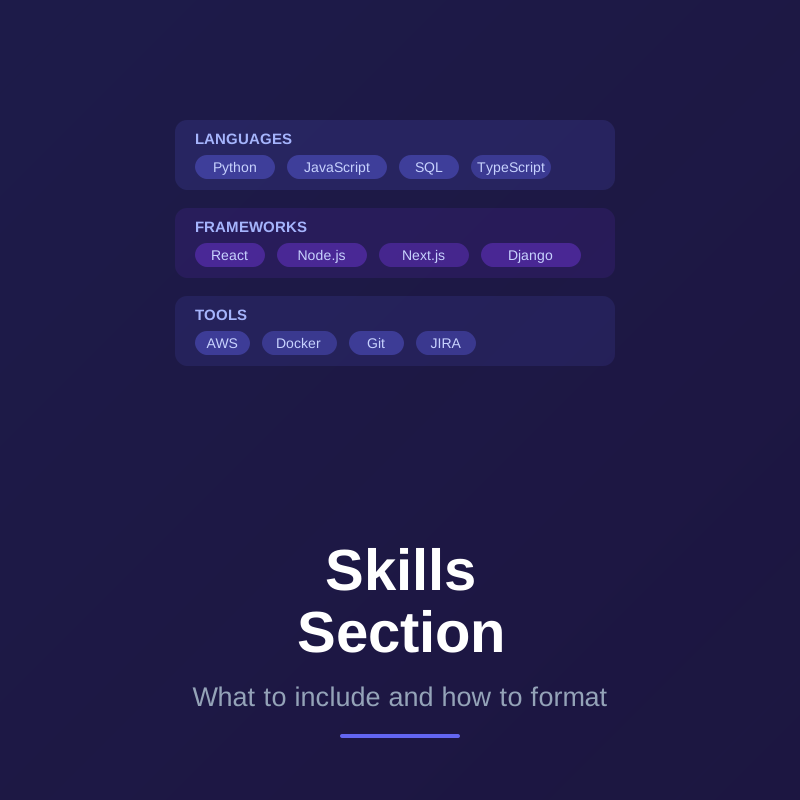
Skills section for CNC machinists
Machines: Haas VF-2/VF-4 VMC, Mazak QT-250 lathe, Okuma LB3000, Citizen L20 Swiss Controls: Fanuc 30i, Haas NGC, Mazatrol SmoothX CAM / CAD: Mastercam 2024, Fusion 360, AutoCAD (drawing interpretation) Materials: Aluminium (6061, 7075), stainless steel (303, 316, 17-4), titanium (Ti-6Al-4V), Inconel, tool steel, engineering plastics (Delrin, PEEK) Quality / Inspection: GD&T (ASME Y14.5), CMM operation, Renishaw probing, SPC/Cpk, first article inspection (FAI), AS9100/ISO 9001 Processes: Turning, milling, drilling, boring, tapping, reaming, grinding (surface/cylindrical), EDM Other: Speeds and feeds calculation, fixture design, tooling selection, Lean manufacturing, 5S
Certifications worth listing
- NIMS (National Institute for Metalworking Skills) credentials — Level 1 and Level 2, broken down by competency area (Milling, Turning, CNC Turning, CNC Milling, Measurement)
- OSHA 10 or OSHA 30 — General Industry
- AS9100 / ISO 9001 awareness training (for aerospace/defence shops)
- AWS D1.1 or similar (if you also have welding qualifications)
NIMS credentials are the most widely recognised machinist competency credentials in the US. If you have them, list each one specifically — "NIMS Certified: CNC Milling Level 1, CNC Turning Level 1."
Education and apprenticeship
AAS in Precision Machining Technology Moraine Valley Community College — 2017
Apprenticeship — CNC Machinist (4 years) Completed through [Employer / Union] — 2013–2017
If you were trained on the job without a formal programme:
On-the-job machinist training Acme Precision Parts — 2015–present Progressed from CNC operator to setup technician over 3 years under a journeyman machinist.
For newer machinists, a community college precision machining programme or vocational training is worth listing with relevant coursework (G-code programming, metrology, blueprint reading, CAM software).
Resume summary examples for CNC machinists
CNC operator:
CNC Operator with 4 years of production experience running Haas VMCs and lathes in a high-volume automotive environment. Skilled in Fanuc controls, in-process inspection, and 2-machine cell operation. Consistent <1% scrap rate. Seeking a setup or multi-machine role with growth potential.
Setup technician:
CNC Setup Technician with 7 years of experience setting up 3-axis and 4-axis machining centres and turning centres across aerospace and medical device programmes. Proficient in Haas and Fanuc controls, fixturing, and first article inspection. Familiar with AS9100 documentation requirements. NIMS CNC Milling Level 1 certified.
CNC programmer / machinist:
CNC Programmer/Machinist with 10 years of experience in high-mix, low-volume precision work. Proficient in Mastercam 2024 and SolidCAM for 3- and 5-axis milling. Experienced with Haas, Mazak, and Okuma platforms. Capable of full job ownership from print to first good part.
Common CNC machinist resume mistakes
- No machine or control specifics. "Operated CNC machines" is meaningless. Name the makes and models.
- No tolerance data. Every precision machinist should list the tightest tolerances they routinely hold. ±0.001" vs. ±0.0001" signals very different skill levels.
- Vague quality language. "Performed quality checks" needs to become "performed in-process inspection using Mitutoyo calipers and bore gauges to ±0.0005" drawing callout."
- Missing materials. Shops are material-specific. Aerospace aluminium and Inconel are very different. State what you've cut.
- Too long. A 3-page machinist resume with every job since high school is counterproductive. Two pages maximum, one page preferred for under 8 years of experience.
Frequently asked questions about CNC machinist resumes
Should I list every machine I've ever touched? List every machine you can genuinely set up and run, not ones you've observed or loaded once. If you can't comfortably discuss it in an interview, leave it off.
I'm mostly self-taught — does that matter? Not to most shops. Demonstrated skill (tolerance capability, material experience, control fluency) matters more than how you learned it. Put your machine experience front and centre.
What if I'm transitioning from manual machining to CNC? Emphasise your metrology skills, blueprint reading, and material knowledge. Highlight any CNC exposure you have, even if limited. Manual machining experience is genuinely valued — it means you understand the physics of the cut.
How should I handle shift work or contract positions? List them normally. Shift and contract work is standard in manufacturing. Include the employer name (or agency + client name), dates, and your responsibilities exactly as you would a permanent role.