Data analyst resume: examples, skills & how to pass ATS
Data analyst is one of the most applied-to roles in tech — and one of the most inconsistently defined. The same job posting at two companies can require completely different tools and responsibilities. Your resume needs to mirror the specific posting, not just list every tool you've ever touched.
Data analyst hiring is heavily ATS-driven. Recruiters search for specific tool names (SQL, Python, Tableau, Power BI), methodologies (regression analysis, A/B testing, data modelling), and business contexts (revenue analysis, churn, forecasting). If your resume doesn't match their search terms, it never reaches a human.
This guide shows you exactly what to include, how to present technical skills, and how to quantify analytical work to stand out.
What data analyst hiring managers actually look for
Before writing a single bullet, understand what separates screened-out applications from shortlisted ones.
Technical competence (tools and methods): Can you work with the stack they use? SQL proficiency is expected at every level. Python/R, visualisation tools, and cloud platforms vary by role.
Business context: Analysis for its own sake doesn't get hired. Hiring managers want evidence you've translated data into business decisions — reduced churn, improved conversion, cut costs.
Communication ability: A common filter question is "can this person present findings to non-technical stakeholders?" Show this in your experience descriptions and summary.
The right structure for a data analyst resume
- Contact information
- Professional summary (2–3 sentences)
- Technical skills section
- Work experience (reverse chronological)
- Projects (especially important for junior roles)
- Education
- Certifications (optional but useful)
Put the technical skills section near the top, right after your summary. Recruiters and ATS systems both scan for tool names early. If SQL is buried in a bullet point halfway down the page, it may not get picked up.
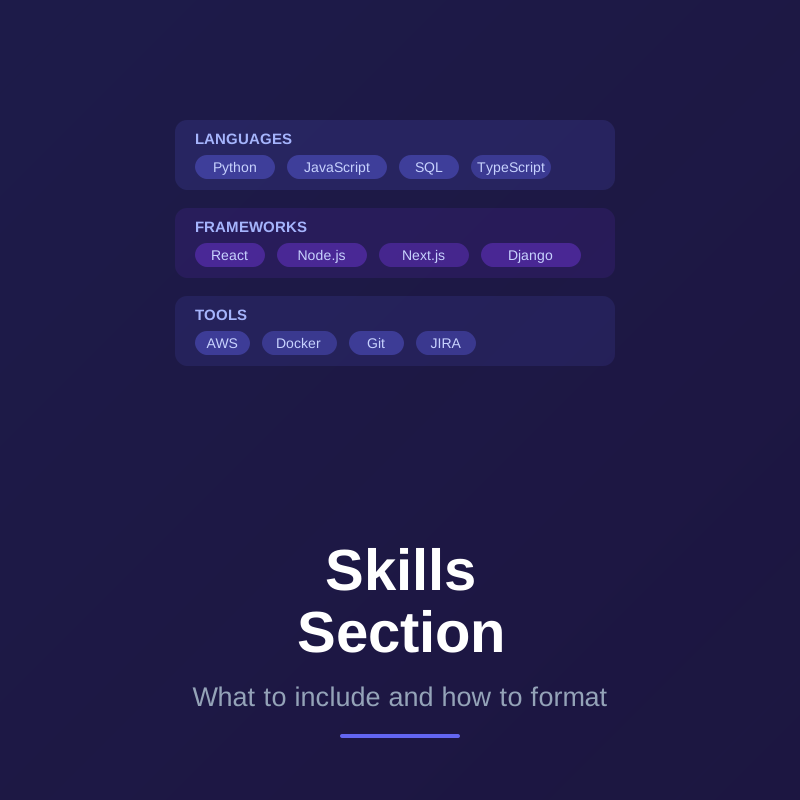
Technical skills section: what to include and how to format it
Group your skills by category — don't dump them in one undifferentiated block.
Example skills section:
Languages & Querying: SQL (PostgreSQL, MySQL, BigQuery), Python (pandas, NumPy, scikit-learn), R Visualisation: Tableau, Power BI, Looker, Matplotlib, Seaborn Data Platforms: Google BigQuery, Snowflake, AWS Redshift, dbt Other Tools: Excel (pivot tables, VLOOKUP, Power Query), Jupyter Notebooks, Git, Jira Methods: A/B testing, cohort analysis, regression modelling, ETL pipelines, data cleaning
Only list tools you can actually discuss in an interview. ATS keyword stuffing gets you screened in and then immediately screened out by a technical hiring manager.
How to write experience bullets as a data analyst
The biggest weakness on most data analyst resumes is vague impact. "Analysed data to support business decisions" tells a hiring manager nothing.
The formula: Action verb + tool/method used + what you measured + business outcome
Weak:
Pulled reports in SQL and created dashboards for the marketing team.
Strong:
Built a weekly SQL pipeline in BigQuery to track campaign performance across 8 channels; created a Tableau dashboard used by 12 marketing stakeholders that reduced reporting time by 60% and contributed to a 14% improvement in email open rates.
More examples of strong bullets:
- Designed and ran A/B tests on checkout flow changes using Python, resulting in a 9% uplift in conversion rate worth $420K annually.
- Developed a customer churn prediction model in scikit-learn achieving 82% accuracy; findings led to a targeted retention campaign reducing monthly churn by 1.3 percentage points.
- Automated 6 recurring Excel reports into a Looker dashboard, saving the ops team 8 hours per week.
Projects section (critical for entry-level candidates)
If you're early in your career, a strong projects section can carry more weight than a thin work experience section.
For each project, include:
- Name of the project (hyperlink to GitHub or portfolio if possible)
- Tools used
- What question you were answering
- What you found or built
Example:
Customer Segmentation Analysis — Python (pandas, KMeans), Tableau Segmented 50,000 e-commerce customers by purchase behaviour and RFM score. Identified 3 high-value segments; presented recommendations to drive 22% higher email campaign ROI.
Kaggle competition entries, capstone projects, and self-directed analyses all count. The goal is showing you can complete an end-to-end analysis.
Resume summary examples for data analysts
Entry-level:
SQL-proficient data analyst with a BSc in Statistics and 2 personal portfolio projects demonstrating end-to-end analysis in Python and Tableau. Strong communicator with experience presenting findings to non-technical audiences.
Mid-level:
Data analyst with 4 years of experience in e-commerce and SaaS environments. Skilled in SQL, Python, and Tableau. Track record of translating complex datasets into actionable recommendations that have directly influenced product roadmap decisions.
Senior / specialist:
Senior data analyst with 7 years of experience in financial services. Expert in BigQuery, dbt, and Looker. Led the migration of legacy reporting infrastructure to a modern data stack, reducing dashboard load times by 75% and enabling self-serve analytics for 40+ stakeholders.
Passing ATS as a data analyst
Data analyst ATS filtering is almost entirely tool-and-keyword-driven. The key rules:
- Match tool names exactly. If the posting says "Tableau" and you wrote "data visualisation tools," you'll be filtered out. Use the exact product name.
- Include both long-form and abbreviations. "Structured Query Language (SQL)" or just "SQL" — use whatever the posting uses.
- Mirror the job title. If the role is "Business Analyst" or "Analytics Engineer," adjust your title in your summary to match.
- Include the seniority level. Entry-level postings look for "junior analyst," "associate analyst," or just "analyst." Mid-level roles filter by years of experience.
Certifications worth including
Certifications signal initiative and cover tools you may not have used professionally yet:
- Google Data Analytics Professional Certificate (Coursera) — widely recognised entry-level credential
- Microsoft Power BI Data Analyst (PL-300)
- Tableau Desktop Specialist / Certified Associate
- dbt Fundamentals
- AWS Certified Cloud Practitioner (if cloud analytics is relevant)
Don't list certifications that are more than 5 years old unless they're still actively maintained.
Frequently asked questions about data analyst resumes
Do I need Python to get a data analyst job? SQL is the baseline requirement for most analyst roles. Python is increasingly expected at mid-level and above, but many entry-level roles will hire strong SQL users. Check the job posting — if Python is listed, include it with evidence.
How long should a data analyst resume be? One page for under 5 years of experience. Two pages is acceptable for senior analysts with extensive project and certification history.
Should I include a portfolio link? Yes. A GitHub profile or personal portfolio with 2–3 projects can be the deciding factor for entry-level candidates. Link it in your contact section.
What if I don't have a data-specific degree? Lead with your skills and projects. A strong portfolio, relevant certifications, and clear evidence of SQL/Python work will outweigh a non-quantitative degree for many hiring managers.