
Should you tailor your resume for every job?
Tailored resumes get 40% more callbacks than generic ones — and with the right method, it takes 10 minutes per application.
Should you tailor your resume for every job? Yes — here's why
The short answer: Yes. Tailor your resume for every job you apply to. A tailored resume that matches 80–85% of a job's keywords will consistently outrank a generic resume scoring 55–60% — and with the right method, tailoring takes 10–15 minutes per application.
Here's why it matters: ATS systems score your resume against the specific keywords in each job description. A generic resume that's a 60% match will rank lower than a tailored one that hits 85% of the required terms. Recruiters also spend an average of 6 seconds scanning a resume — if the most relevant experience isn't immediately visible, you lose them.
Every role emphasizes different skills and experiences. A generic resume forces recruiters to hunt for relevant qualifications instead of seeing them right away.
Why generic resumes fail
Sending the same resume to every job is like wearing the same outfit to a beach party and a business meeting. Recruiters can tell immediately when a resume hasn't been customized, and ATS systems will rank you lower if your keywords don't match.
The problem isn't that your experience is irrelevant — it's that the relevance isn't visible. A recruiter hiring a backend engineer shouldn't have to search through frontend project descriptions to find one relevant line. Tailoring makes the right experience impossible to miss.
The smart tailoring method
You don't need to rewrite your entire resume for each application. Instead, focus on strategic adjustments that take minutes, not hours.
Start with a master resume: Create a comprehensive document with all your experiences, skills, and accomplishments. This becomes your source material for every tailored version. Never apply directly from this document.
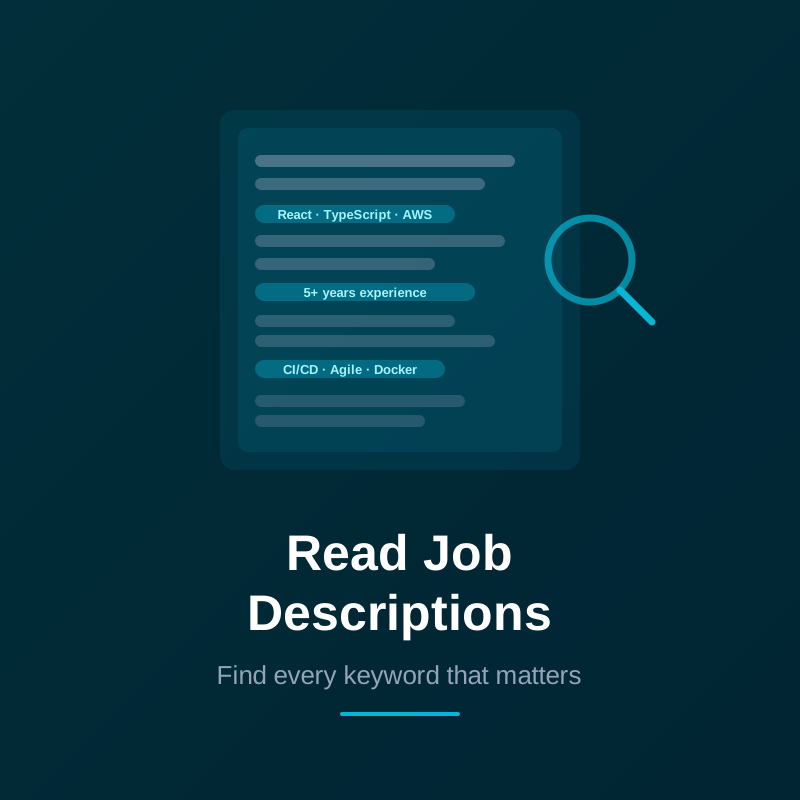
Analyze the job description: Identify the top 5–7 skills and requirements mentioned repeatedly. These are your target keywords and priorities.
Adjust your summary or objective: Rewrite your opening statement to directly address what this specific role needs. Mention the job title and 2–3 key qualifications they're seeking.
Reorder and emphasize relevant experience: You don't need to delete experiences, but highlight the most relevant ones. Move the most applicable role higher if it's not your most recent position, or expand bullet points that demonstrate required skills.
Customize your skills section: Move the skills mentioned in the job description to the top of your list. Add any relevant skills you have that appear in their requirements but might not be on your current resume.
Before and after: what tailoring looks like in practice
Here's an example of a summary tailored for two different roles from the same candidate:
Generic (never use this):
Experienced software engineer with 5 years building web applications. Skilled in multiple programming languages and frameworks. Team player with strong communication skills.
Tailored for a frontend-focused role:
Frontend engineer with 5 years of experience building performant React and TypeScript applications. Strong focus on UI quality, accessibility, and working closely with product and design teams.
Tailored for a backend-focused role:
Backend engineer with 5 years of experience designing scalable APIs and data pipelines. Experienced with Node.js, PostgreSQL, and AWS — focused on reliability and performance at scale.
Same candidate, same experience — completely different first impression.
Quick wins that make a big difference
Match the exact job title they're hiring for in your objective or summary. If they want a "Product Marketing Manager," don't say you're seeking a "Marketing Leadership Role."
Use the same language they use. If the job description says "stakeholder management," don't write "client communication" even if they mean the same thing.
Quantify achievements that align with their goals. If they emphasize growth, highlight percentage increases and expansion metrics.
How long should tailoring take?
With the right tools, you should spend 10–15 minutes per application, not hours. Here's a realistic breakdown:
- Read and highlight the job description: 3 minutes
- Update your summary: 2 minutes
- Reorder your skills section: 1 minute
- Rewrite 2–3 key bullet points: 7 minutes
- Check your keyword coverage: 2 minutes
That's 15 minutes total. The engineers who get more interviews aren't spending more time per application — they're being more precise with the time they spend.
Do you need to tailor your resume if you're applying to many jobs?
Yes — but work smarter, not harder. Create 2–3 base versions of your resume for the main directions you're applying in (for example: frontend engineer, full-stack engineer, and engineering lead). Use those as starting points and make small keyword adjustments for each individual application.
This keeps the effort minimal while still giving you a real advantage over candidates sending the exact same document to everyone.
Tailoring when you're changing careers or industries
Career changers face a harder version of this problem: not only do you need to tailor for each role, you need to reframe your experience for a different context entirely.
The key is to lead with transferable skills and translate your old experience into the language of the new field. If you're moving from teaching into instructional design, don't say "managed a classroom of 30 students" — say "designed and delivered curriculum for 30+ learners, tracking progress and adjusting content based on outcomes."
The experience is the same. The framing is completely different. Tailoring for career changers is 80% reframing and 20% keywords.
Common tailoring mistakes to avoid
Tailoring the title but nothing else: Changing your summary to mention the right job title but leaving your skills section and bullet points generic. ATS will still score you low if the keyword coverage isn't there throughout the resume.
Over-tailoring to the point of dishonesty: Don't claim skills you don't have just because they're in the job description. Misrepresentation gets caught in interviews or after hiring. Tailor how you present genuine experience — don't invent it.
Forgetting to save the version you submitted: When you get a call back, you need to remember which version of your resume you sent. Save each tailored version with a filename that includes the company and role.
Resume tailoring checklist
Use this before every application to make sure you've covered the basics:
Keywords and content:
- Identified the top 5–7 required skills/tools from the job description
- All top required keywords appear verbatim in your resume (skills section + experience)
- Your summary mentions the target role type and 2–3 key matching qualifications
- The most relevant bullet points are near the top of your most recent role
Language and framing:
- Your language mirrors the posting's terminology (not just synonyms)
- Job title in your summary/objective matches or closely reflects the target role title
- Quantified achievements highlight the metrics the employer cares about (growth? efficiency? scale?)
Clean-up:
- Skills section is reordered so the most job-relevant skills appear first
- Any experience that's clearly irrelevant has been condensed or removed
- File is saved under a name that includes the company and role for your own tracking
Final check:
- Read the resume as if you were the recruiter — does the most relevant experience jump out in the first 6 seconds?
- ATS keyword match is 70%+ of stated requirements
Frequently asked questions about tailoring your resume
Should I tailor my resume for every single application, even if I'm applying to dozens of jobs? Yes, but use the tiered approach: maintain 2–3 base versions and make minor adjustments rather than starting from scratch each time. Sending 50 identical resumes is significantly less effective than sending 50 resumes each 80% tailored to their target role.
Is it worth tailoring for jobs I'm a long shot for? Probably not worth heavy investment. For reach applications, a quick 5-minute keyword sweep is sufficient. Save the deep tailoring for roles you're well-qualified for.
What's the most important part of the resume to tailor? The skills section and the first bullet point of your most recent job. Recruiters see these first. The summary matters too, but many recruiters skip it entirely — don't rely on it alone.
Should I tailor my resume or my cover letter? Both — but prioritize the resume. The resume gets reviewed more often and carries more weight in ATS scoring. The cover letter is read only if the resume already passed.
How many versions of your resume should you have? Two or three base versions is the practical answer for most job seekers. One base version per major direction you're applying in — for example, "frontend engineer," "full-stack engineer," and "engineering lead" if you're targeting all three. Each application then gets minor keyword and bullet adjustments from the relevant base. Having more than three active versions becomes hard to track and maintain; having only one makes every tailoring session start from scratch.
Don't forget to tailor your cover letter for ATS as well.
Make tailoring effortless
The difference between a 20% response rate and a 60% response rate often comes down to how well you've matched your resume to each specific opportunity. When you can see exactly which keywords you're missing and adjust them in real time, tailoring becomes a competitive advantage instead of a chore.